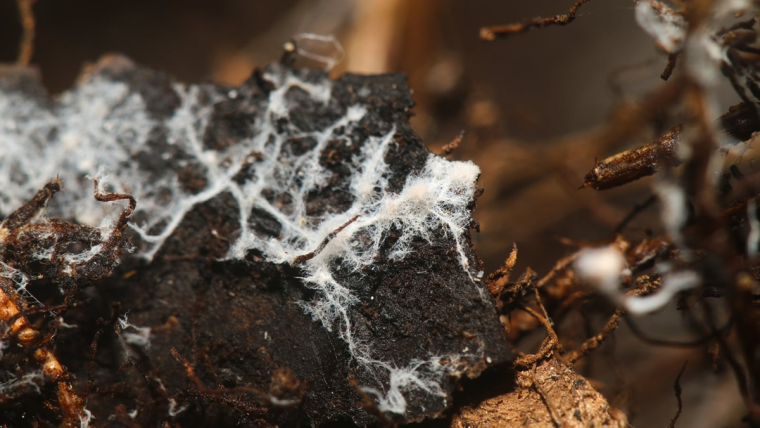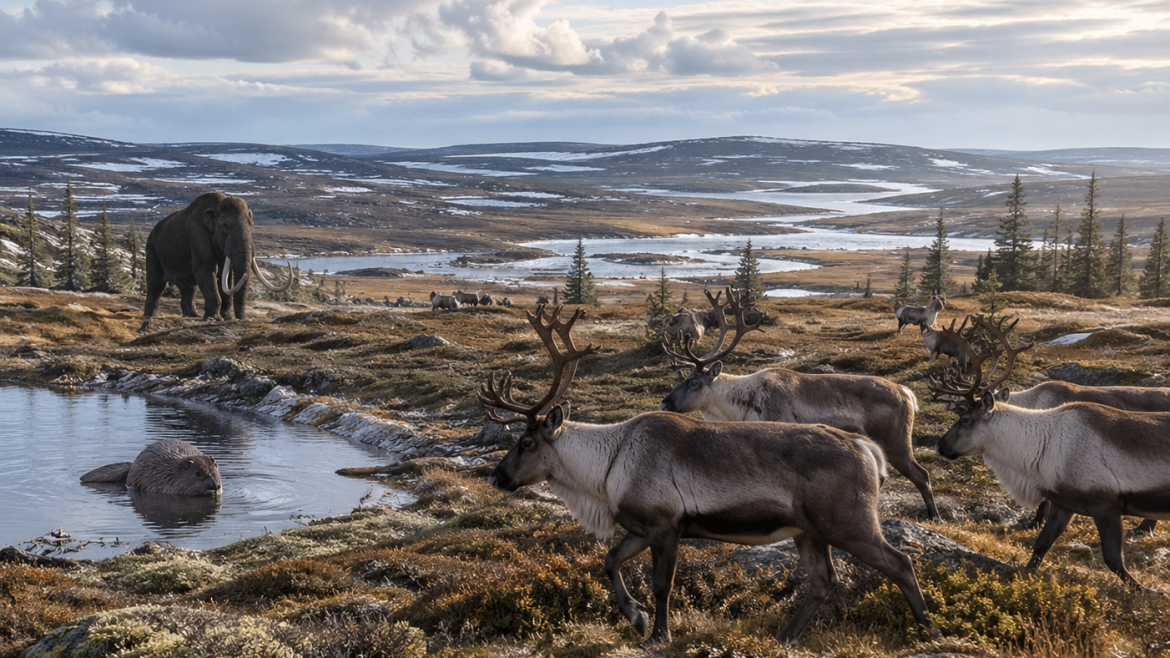
Looking at the largely barren post-glacial landscape, scientists call it tundra. Yet, it is really a nascent forest. At first glance there isn’t much to see. No trees. No towering canopy. Nothing most people would recognize as a forest. Yet the land is teaming with life. Microorganisms are rapidly reproducing. Fungi are spreading, forming partnerships with the earliest plants, helping them obtain water and nutrients released as rocks slowly weather. The first of those recognizable organisms include mosses and lichen, not to mention algae and bacteria. Those humble beginnings contain everything needed for a forest to emerge.
It’s also what’s needed to attract migrating megafauna like elk, mammoths, and giant beavers, soon followed by wolves. As they nibble, graze, and hunt, they drop their scat all over the landscape. Among the nutrients they returned to the land were countless seeds carried from elsewhere. New habitats form, ideal for growing well-adapted plants. Successive generations of this life then decayed and began the process of forming layers of soil. As centuries and millennia passed, enough soil accumulated for trees to establish themselves. Eventually the forest matures to resemble what we see today.
Meanwhile, the life that began on the tundra 10,000 years ago remained, as the combination of plants and fauna constantly changed. Some of the earliest microorganisms survived the glacial period beneath the ice or in nearby refuges. Others arrived as the ice retreated. Together they formed the beginning of the living communities from which the forest eventually emerged. This chain of life extends from one interglacial period to the next unbroken. People should take a moment to think of tundra as just one stage in the continuous story of a forest’s life. The tundra isn’t the opposite of a forest after all. Perhaps it is simply the forest’s earliest memory.