A forest hike where curiosity, history, and science turn an ordinary walk into a fun and surprising discovery experience.
Every rock, tree, and landscape feature has a story to tell — if you know how to see it.
Most people walk past these stories. Here, you don’t.
The Mindfulness Trail and Maze is a network of over a mile of well-maintained, easy-to-hike trails where visitors can experience the mysteries and secrets hidden in the Maine forest.
The Mindfulness Trail is free of charge and open to the public.
Hidden in Plain Sight
Ordinary at first glance. More interesting when you look closer.

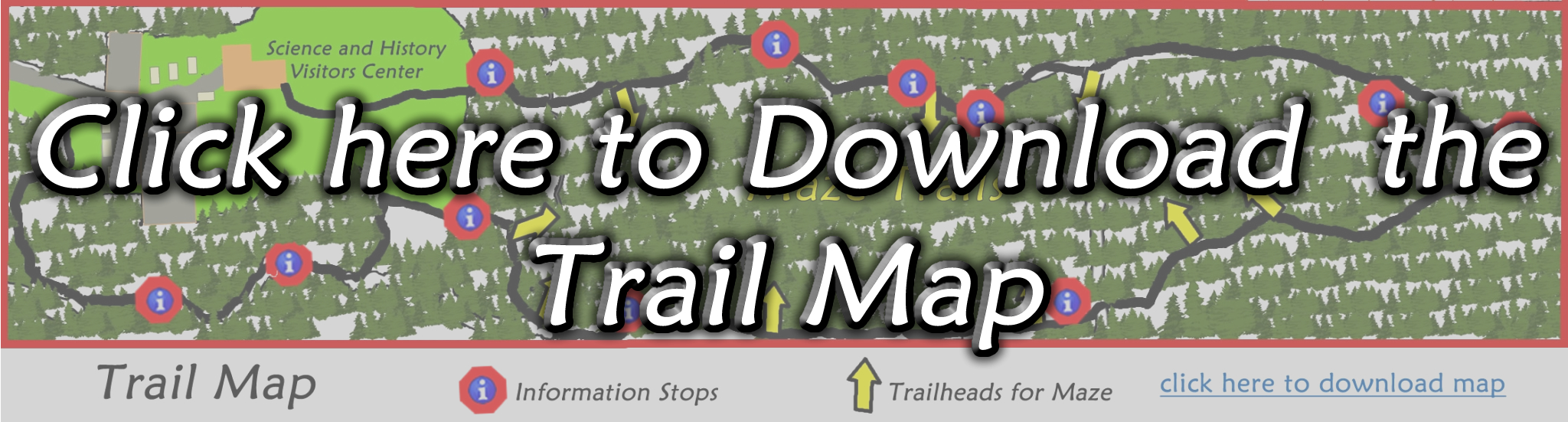
Get lost in the Maze trails. Explore this part of the forest and then find your way out. You might get lost temporarily but eventually all Maze trails lead to somewhere on the Loop trail. You can also “get lost” in the mindfulness sense. In other words, let yourself get lost in the amazing life of the forest. Either way, it is a fun way to experience and explore whatever you will find. Let us know if you discover something new. The information stops on the Loop trail will help you interpret some of what you see.
Mindfulness Trail is being shaped one thoughtful project at a time—paths, markers, and tthe science and history discoveries that make visitors stop and look closer. Volunteers help make that real. You don’t need special skills—just a willingness to show up and contribute. It’s hands-on, outdoor work with a purpose… and it’s genuinely fun to see the trail evolve because you were part of it. No pressure, no expertise required. If you like the idea of contributing in a calm, grounded setting, you’ll fit right in. Download a volunteer application here.
Our Mission
We welcome curious minds of all ages to explore the Maine forest with us—through science, history, and hands-on discovery. Whether you're a young adventurer or a lifelong learner, we invite you to uncover our natural wonders and rich past. Together, we learn, share, and grow—deepening our connection to Maine’s forested places and having fun along the way.
Why”Mindfulness”? and other Frequently Asked Questions
Why "Mindfulness"?
Mindfulness is a great way to experience any Maine forest.
Mindfulness simply means being in the moment and using all your senses to discover what's around you.
No special training. Everyone naturally understands.
Just take a moment and only think about what is going on in this instance. Let the moment pass as you focus on the next moment. Go moment to moment like that. Avoid thinking about things in the past or in the future.
As you walk the trail, you can do this periodically to help you take in the whole environment - all the sights, sounds, smells, and other sensations. You will notice more subtleties.
You will discover more. It will enhance your experience.
You don't need to go into deep meditation or some kind of a trance. You can slip into and out of mindfulness like a switch on and off.
You don't need mindfulness to enjoy the forest. It is not a requirement.
With mindfulness you will gain a better appreciation of this landscape and any place you wish to use it.
Should I call first?
It's a good idea. We have limited parking and, of course, we don't want to be overcrowded. We are happy to reserve a time for you (no charge). We don't want to disappoint you or make you wait for others to leave. You can reserve a time for whatever length you wish. Eventually we hope to have self-scheduling online.
What if I need to cancel?
No problem. There is no cost involved, so you can always cancel or reschedule. Please give us a call, so we can make the spot available for others.
What about bad weather?
We try to stay open 7 days a week. Sometimes we close due to dangerous weather conditions, as a safety precautions. If you have a reservation, we will attempt to contact you, as soon as we are forced to close. We will also post any altered hours on our Facebook page.
If I get injured, what are the landowners liabilities in Maine?
Landowner Liability Law in Maine
This information was printed in the SWOAM (Small Woodland Owners Association of Maine) monthly newsletter. If you wish to join SWOAM, or contact them, please use the contact information provided.
The law, as written, can be accessed by clicking on the provided link at the bottom of the page.
MAINE Landowner Liability Explained
This information applies to individuals, businesses, nongovernmental organizations and other non-governmental entities that own, manage, lease, occupy or hold easements on land.
If someone comes onto my land and gets hurt, am I liable?
No, except in rare circumstances. Maine has a strong law to protect landowners, known as the "landowner liability" law (or the "recreational use" statute), Title 14, M.R.S.A. Section 1 59-A.
If someone uses your land or passes through your land for outdoor recreation or harvesting, you assume no responsibility and incur no liability for injuries to that person or that person's property. You are protected whether or not you give permission to use your land. If you allow volunteers to maintain or improve your land for recreation or harvesting, you are also protected from liability for injuries to them.
What does the law mean by "outdoor recreation" and "harvesting"?
Outdoor recreational activities include: hunting, fishing, trapping, camping, hiking, sight-seeing, operating snow-traveling and all-terrain vehicles, skiing, hang-gliding, dog sledding, equine activities, boating, sailing, canoeing, rafting, biking, picnicking, swimming and other similar outdoor activities. Recreational activity also includes environmental education and research. Harvesting includes harvesting of forest, field and marine products such as boughs, fiddleheads, and clams. You are protected even if the person using your land is harvesting the products for sale. Of course, the law does not protect an employer from liability for injuries suffered by workers in agriculture or forestry, not does it protect the owner who charges users for the right to harvest, such as "U-pick" operations.
Is the legal protection the same if I post my land "No Trespassing"?
Yes. As a practical matter, your legal protection is the same whether or not the land is posted.
Is it still possible for me to get sued in spite of the landowner liability law?
Yes, but it is very unlikely for two reasons: (1) a person who brings suit and loses because of the landowner liability law must pay the landowner's legal fees and court costs, and (2) the law protects landowners so clearly that there is little opportunity for the injured person to win. In fact, there has not been a single reported successful case against a landowner where the Maine landowner liability law applied.
Does my homeowner's or farmer's Insurance provide me with protection from claims?
Your homeowner's or farmer's liability insurance gives you important protection. The insurance company has two responsibilities under most policies. The company has the duty to pay for the costs of defending any lawsuits brought or threatened against you (the "duty to defend"). In addition, if you are found liable in a lawsuit, the insurer has the duty in most circumstances to pay the damages assessed against you (the "duty to indemnify").
Although each insurance policy has specific coverage and dollar amount limits, most personal injury actions against landowners will fall squarely within the coverage provided by most home and farm liability policies._For all practical purposes, these policies assure landowners of a paid defense of any claims made against them and assure that judgments against them will be satisfied up to the dollar amount of the policy limit. Be sure to check with your carrier regarding your specific coverage.
Are there situations in which the landowner liability law does not protect me from liability?
Yes, The landowner liability law does not provide protection if a person is injured because of the landowner's "malicious" failure to guard or warn against a dangerous condition. "Malicious" does not mean that you must have a conscious dislike for the person.
Malicious intent may be inferred when the landowner has knowledge of a highly dangerous situation, usually man-made, that would have been simple to remedy or warn against and the landowner failed to do so, knowing that people would be likely to be hurt.
Am I still covered by the landowner liability law if I charge a fee to use my land?
Maybe. In general, landowners running commercial recreation or harvesting operations on their land are not protected. For example, commercial campgrounds or ski areas cannot expect to be protected by the law.
But landowners do not automatically lose their protection if they charge fees. The landowner liability law applies to landowners who charge fees for entry as long as the land is not used mainly for commercial recreation as long as the payment is not for exclusive use, such as club membership or rental for an event or campsite.
A Word of Practical Advice
Use common sense. Try to avoid creating or allowing clearly dangerous situations. For example, if you wish to block a road by hanging a chain, it would be a good idea to flag the chain or take some other action to make it easily visible.
Also, the best advice regarding fees is not to charge them. Otherwise, you may have to prove that the land is not used primarily for commercial recreation and that the user did not gain any exclusive right to use the land.
This information was prepared by the Androscoggin land Trust with assistance from the Rivers, Trails and Conservation Assistance program of the National Park Service; the trial group at Skelton, Taintor & Abbott, P.A.; Maine Coast Heritage Trust; and many other individuals. The publication was funded through the National Recreational Trails Fund Act (Symms Act).
The information is only a summary.
Please consult a lawyer for more detailed information and advice specific to your situation. You may also contact the landowner relations coordinator in the Maine Department of Inland Fisheries and Wildlife who works with landowners and land users on issues of access (207) 287-8091 }.
If you want to read the law, click here Title 14, 159-A
Do I need to bring my phone?
It is a good idea, if you want to access the QR codes at each Information Stop. You will get to watch a short video (usually 1 minute) explaining what you are seeing. if you are interested, there is more information below the video that you can read. We are also Crowdsourcing - your ideas. We want to improve the educational experience. Maybe we got something wrong or maybe you have additional facts to share. There is a form on every page for your comments. All the information is also available on this website for later viewing.
How You Can Participate
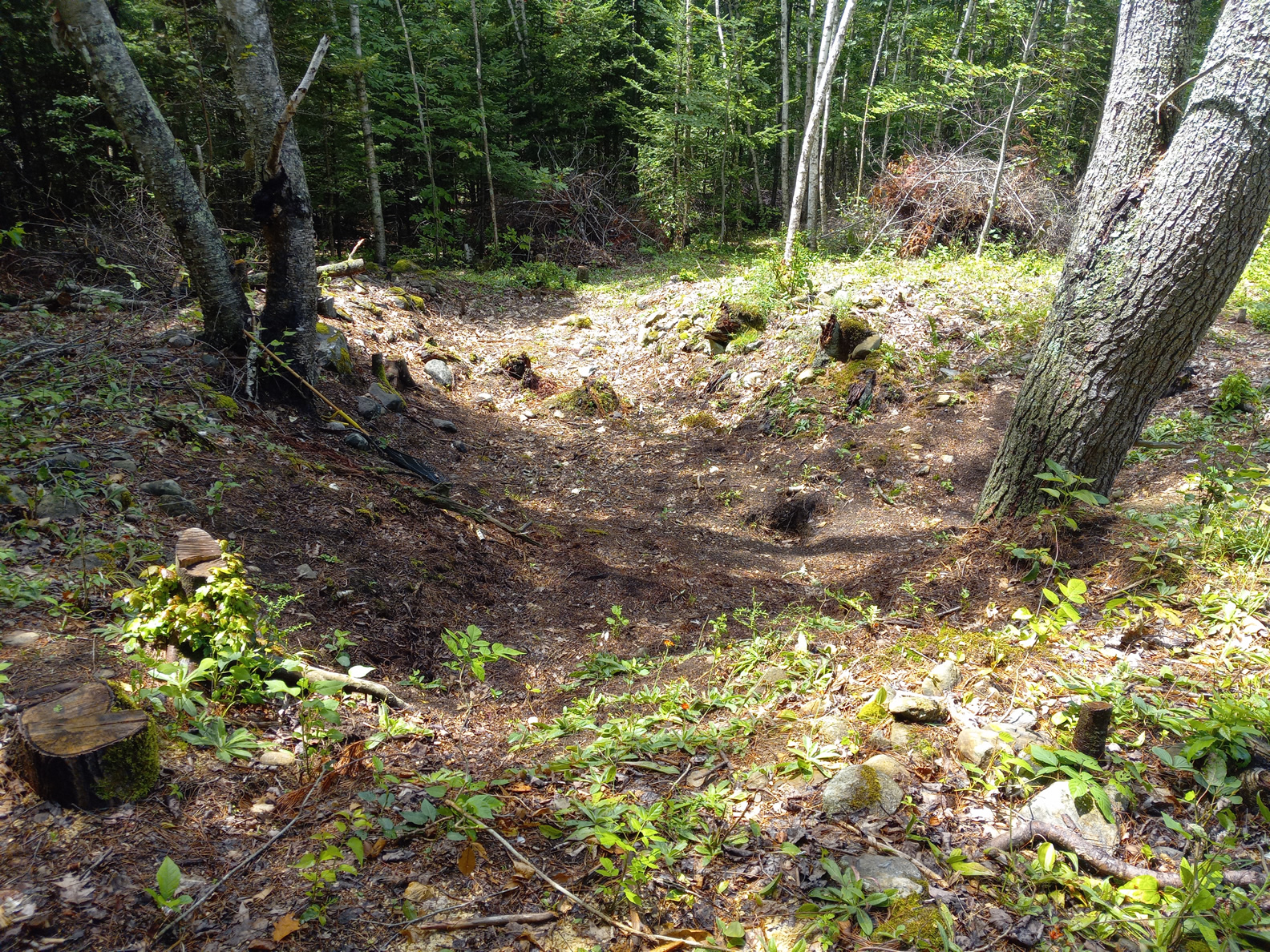
Have you ever wanted to be an archeological detective? This is your chance!
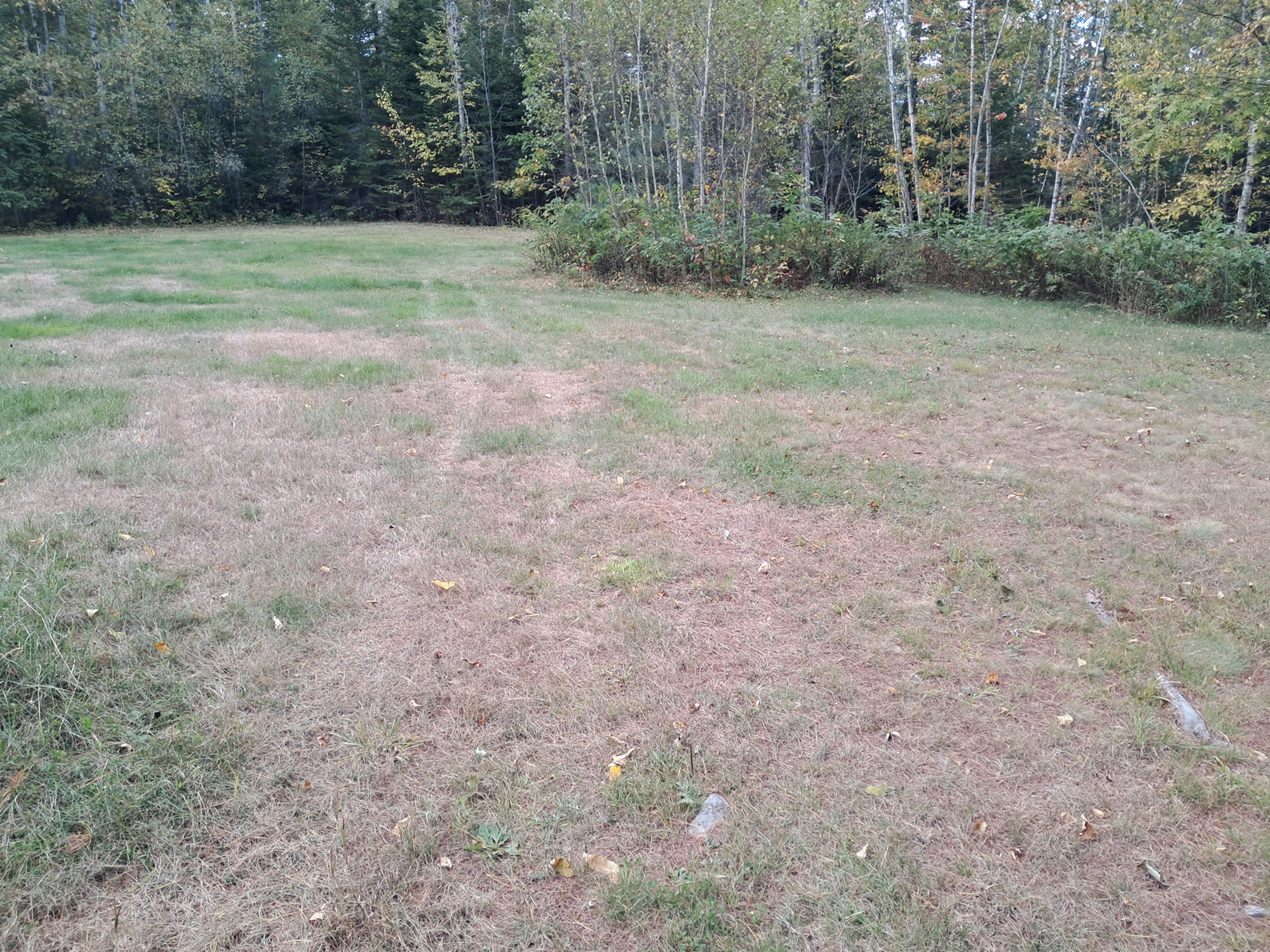
In the 1700’s settlers worked hard to clear and maintain farmland. Clues all around can help us trace the history of agriculture in this part of Maine.
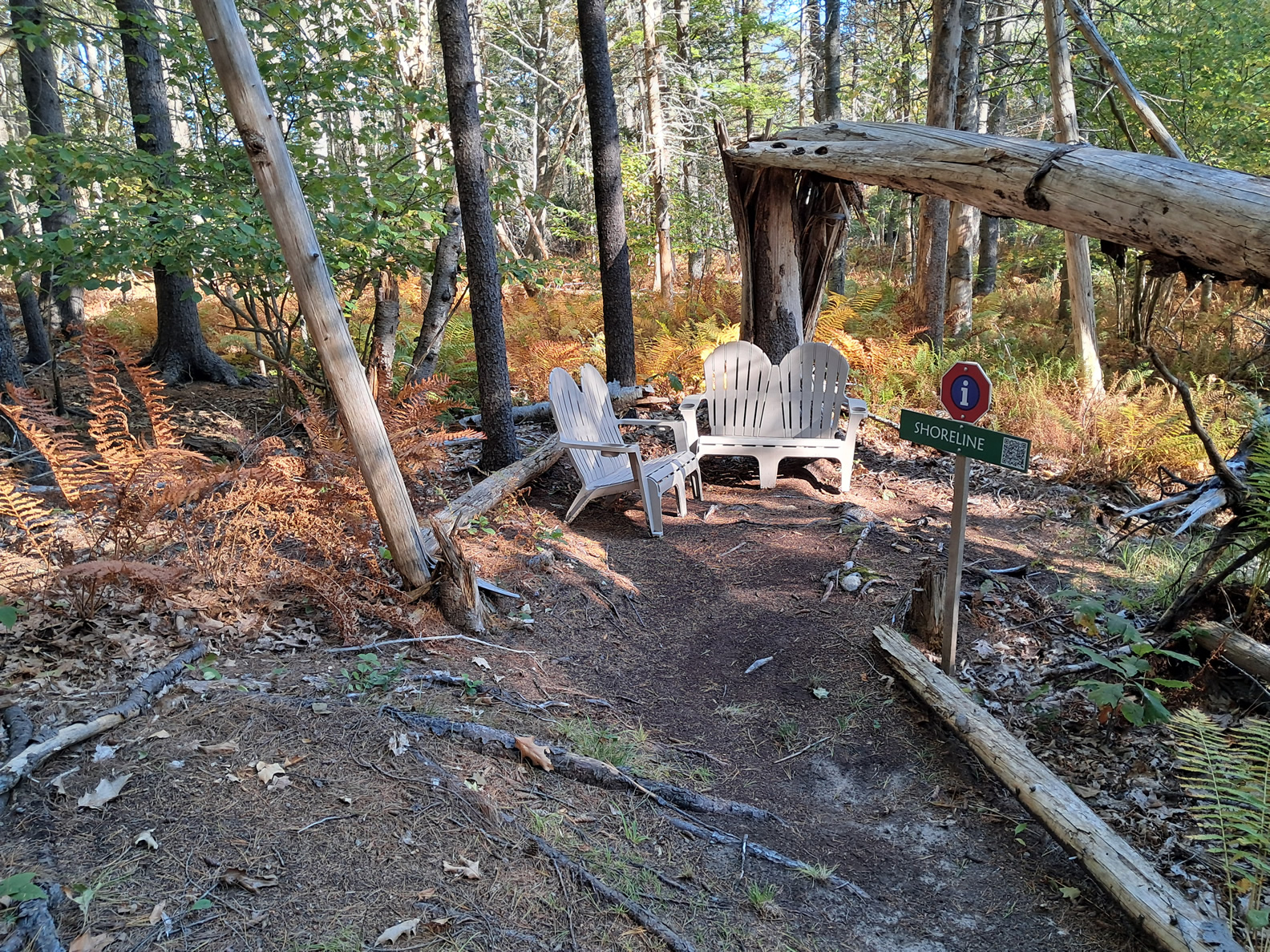
There is evidence of ancient marine life hidden here. A shallow pit will likely uncover their remains.
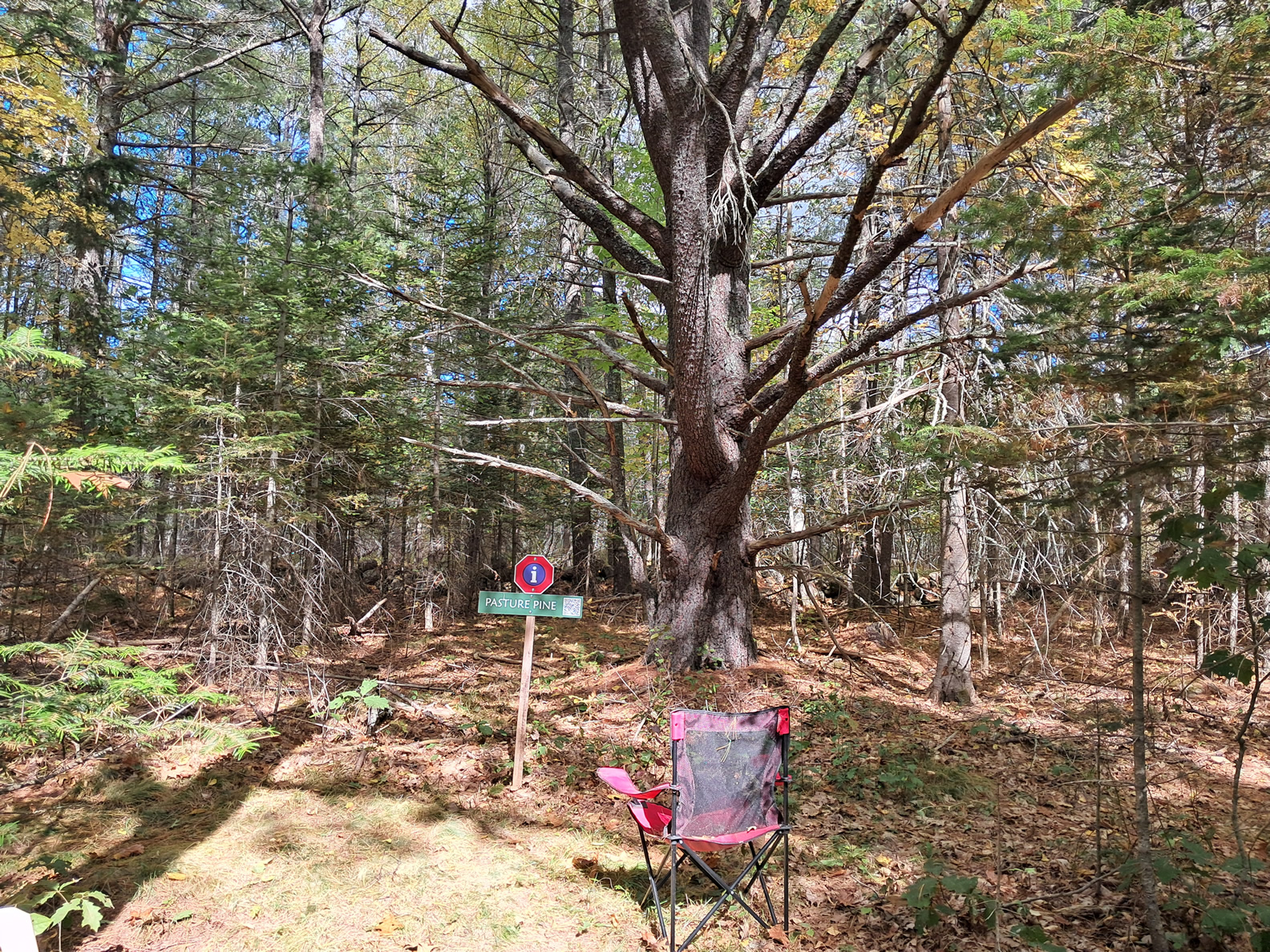
Every tree has a story to tell. By dating and mapping pine trees we can reveal the history of the landscape here and throughout Maine.
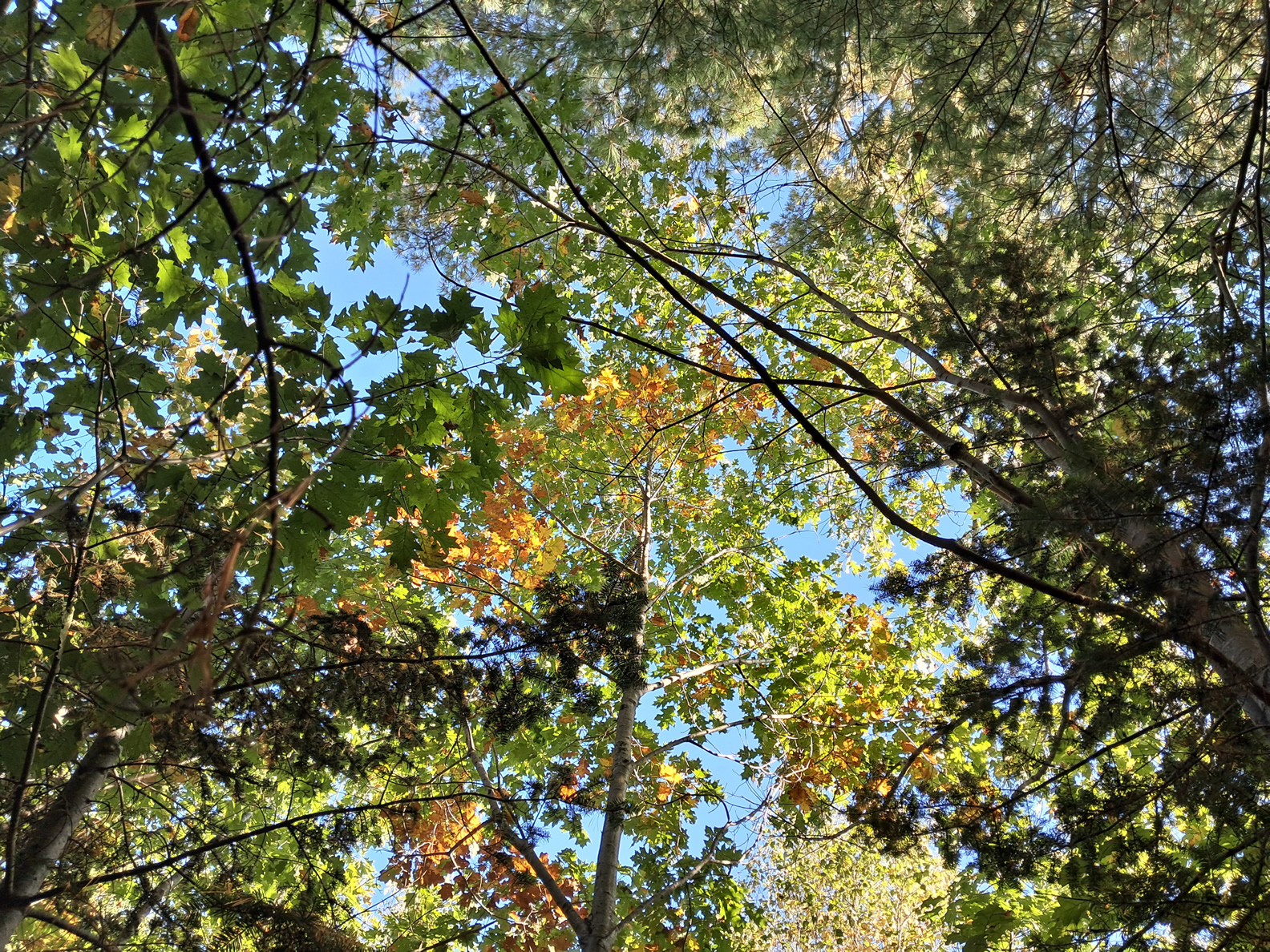
Diversity is a reliable marker for the well-being of a forest. Microhabitats are important parts of a healthy ecosystem. They are everywhere. Let’s find and explore them.
Help us develop the Mindfulness Trail and our educational programs.
We Support These Organizations
. . . you should too!