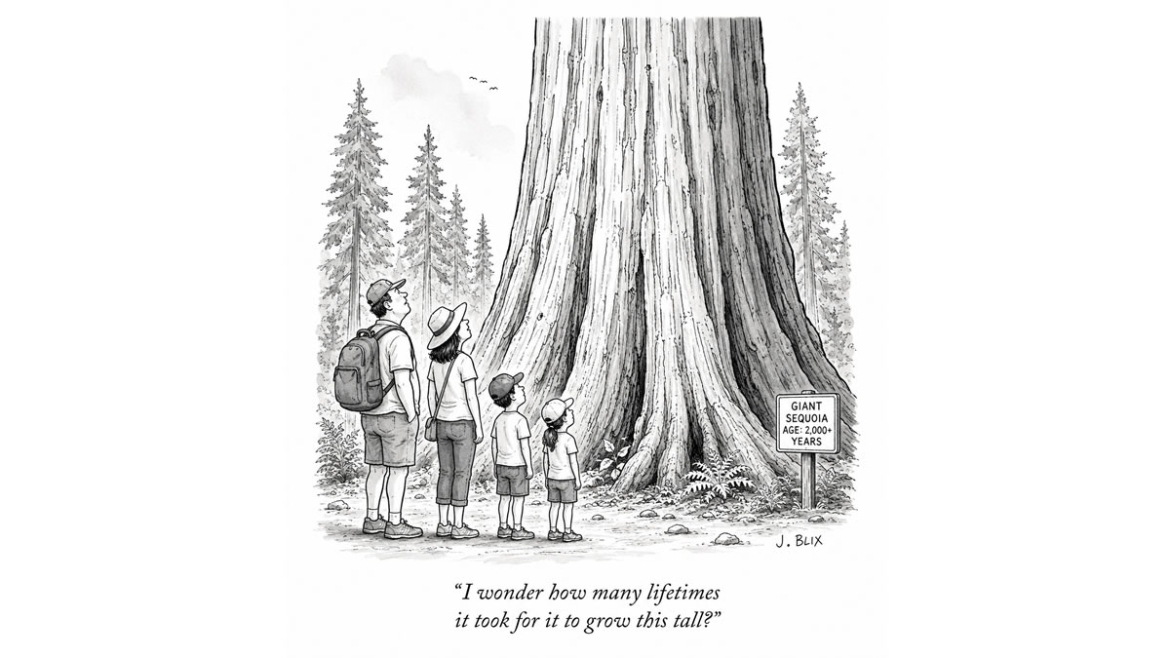
The answer is one. Lifetimes are relative. In the forest every living individual is destined to be born and die within its own “life time”. Yet, the forest itself carries on. The forest doesn’t really have a lifetime. Without any catastrophic disturbances a forest just continues growing, developing, and evolving. Every individual organism in it will eventually die and be replaced, leaving the forest changed but wholly intact. It takes a catastrophic disturbance for a forest to die.
Every few hundred thousand years or so, the climate alters and this landscape slowly cools, until it can no longer support life, except for bacteria and specialized microorganisms. Every other individual exits to warmer climes or simply dies. Whatever is left is hardly what you would call a forest. The landscape is covered with a deep icesheet. As a warmer climate returns and the ice melts, the forest can slowly rebuild. The new forest is never the same as the old forest, which is fine. Change is always a part of life.
Disturbances are normal. Without disturbances there can be no evolution. A moose walking through this forest creates a disturbance, albeit a small one. Those minor disturbances happen every day. The forest welcomes them. In fact, the moose is a part of the forest. A storm uproots a tree is another common disturbance. As it decays and feeds billions of insects and other organisms, it also creates an opening in the canopy for new trees to emerge. Given this backdrop, can humans be a part of this forest network?
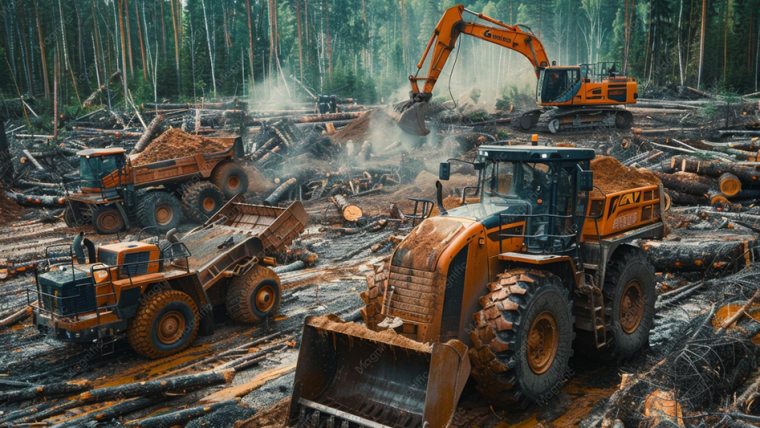
More recently during this interglacial period, a new anthropogenic disturbance has emerged. It began with the immigration of native people. It continued with the industrial revolution and the impact of so-called greenhouse gases. European settlers inflicted powerful disturbances on this forest. The problem with people is that they look at a forest as a collection of unrelated “things”. The attitude is that a tree is only valuable after it is slaughtered and cut into pieces. Yet, there are signs of change, as people begin to develop a deeper appreciation of the complex associations in all the system of the living world, on which we depend. Where this story goes is uncertain.
So, what do all these sudden and often violent disturbances mean for the forest? Certainly, the forest will attempt to fight back. Just look at this forest today. It is slowly healing from these recent human impacts. An inventory of this forest will tell you that all the ingredients are here for a mature forest to re-emerge. As the forest continues to wrestle with the necessity of co-existing with humans, it simply hopes for peace.