
Birch, maple, and pine are the most common spider tree species. Success may depend on the symbiotic relationships with fungi that help decompose the stump and provide nutrients to the seedling.
The rock pile next to the spider tree has all of the features that are expected when rocks are dumped in a pile from a cart during field clearing. Over the past 250 years, soil has built up around the rocks embedding them in the ground. This rock pile is some of the best evidence of former agricultural activity.
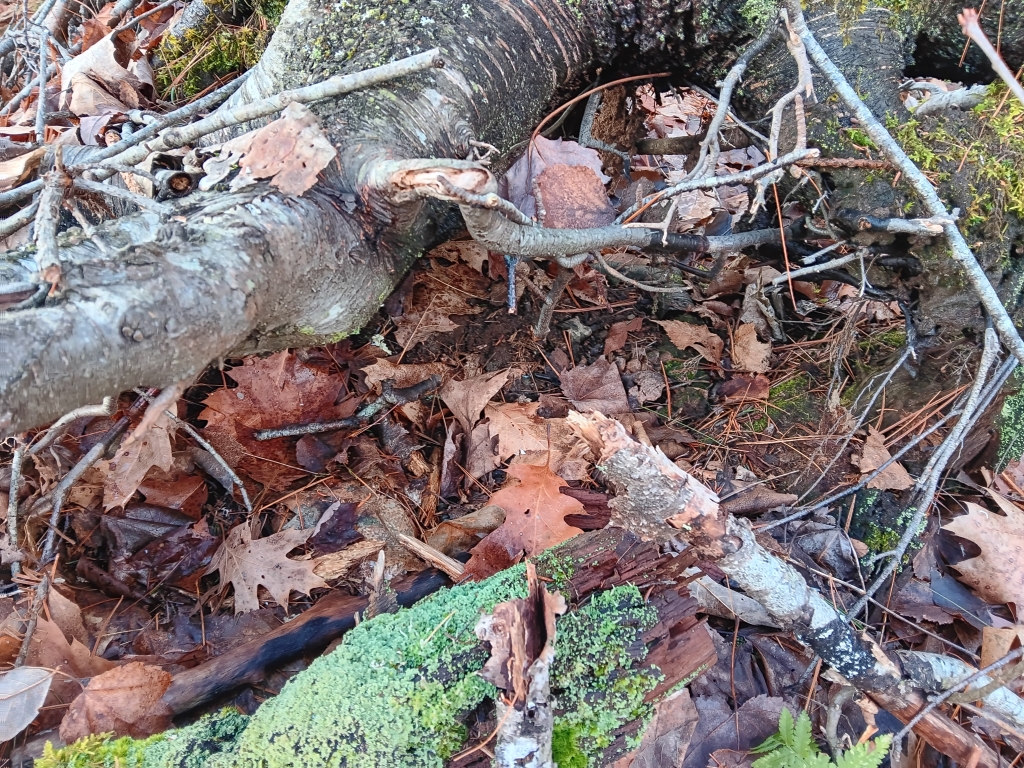
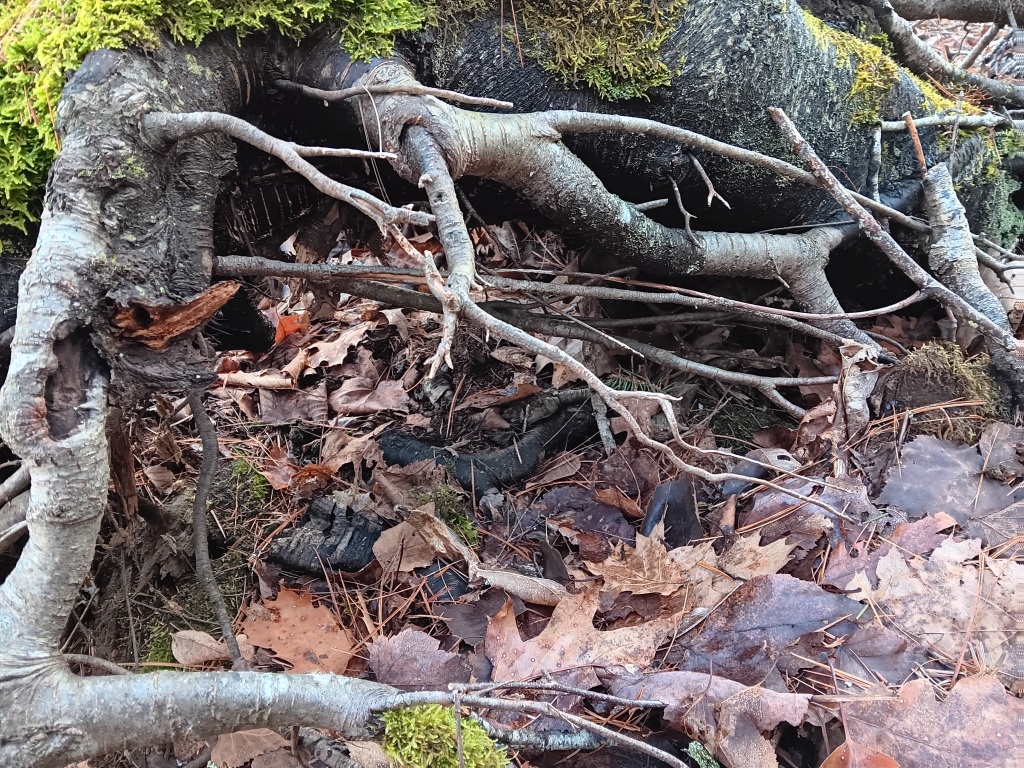
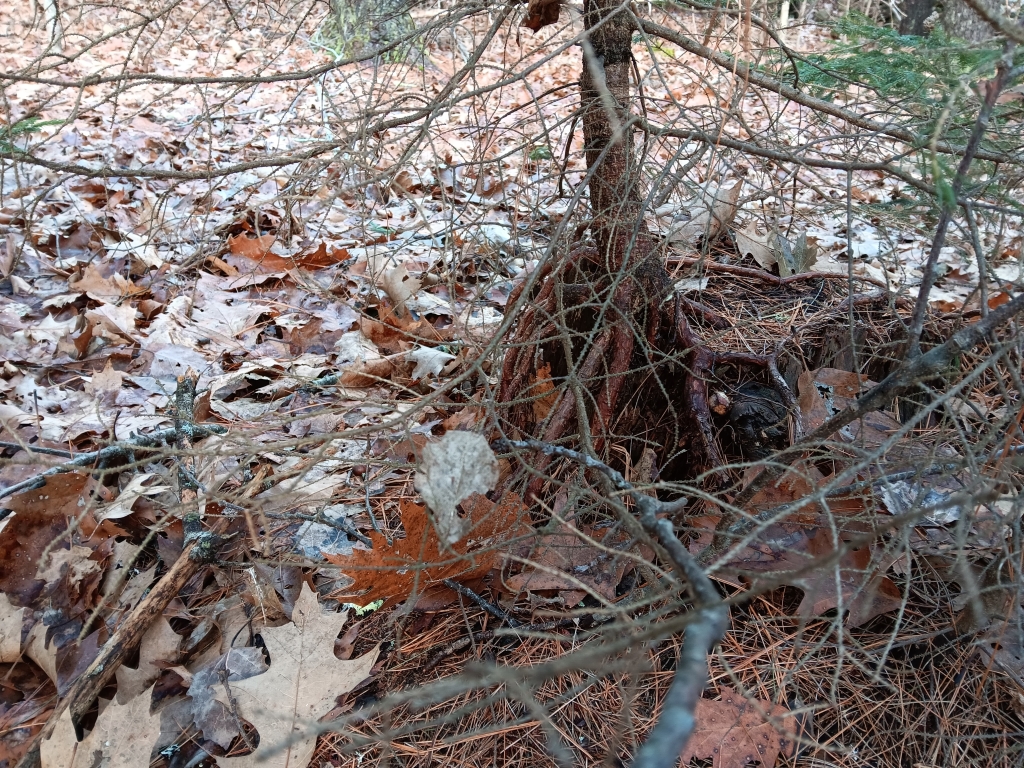
A baby spider tree
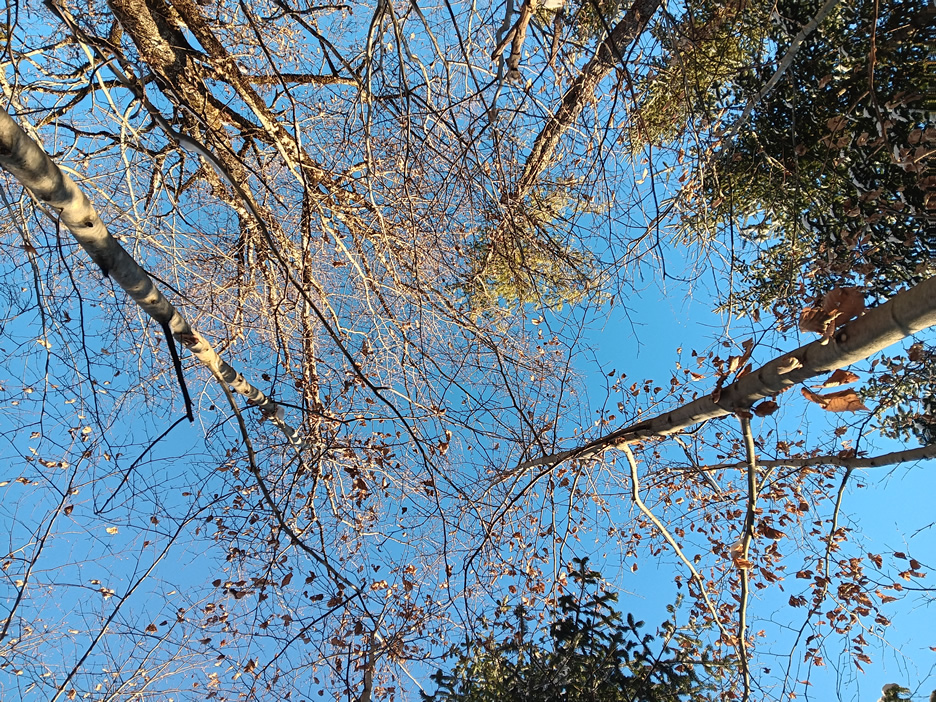
Diversity and Ecology Project:
How do we measure diversity?
Species richness and evenness, forest structural diversity, animal wildlife indicators, and genetic diversity are all factors that we can measure. One of the most fascinating ways to begin this project is by exploring life in hidden microhabitats, including underneath spider trees and high in tree-top branches.
More long-term studies can also begin, such as sample plots and species counts.
Imagine what unusual species you might find. Maybe even some new ones.
Please support all our projects with a donation! All funds will be used to support volunteers and our educational mission.
Most of the tools needed to undertake this project have already been donated. We are ready to go.
We only need volunteers. Volunteer for an hour or a few hours.
Please make a donation to support this project and our educational mission.
For a limited time we can match your donation dollar for dollar!
We do not share your information with anyone!
Our Privacy Policy