
More about Pillow and Cradle
Blowdowns
Thunderstorms are a common occurrence in Maine, so pinpointing the date when this tree fell would be nearly impossible. This part of Maine experiences 20-30 thunderstorms each year, mainly during the late spring and summer months. 1-3 nor’easters strike each year and hurricanes hit here once every 50 years. There are more precise records for nor’easters and hurricanes, making it easier to date those blowdowns.
Identifying blowdown directions needs to be done carefully. If the tree hit another tree or some other obstacle, it could bounce off it and land at a different angle.
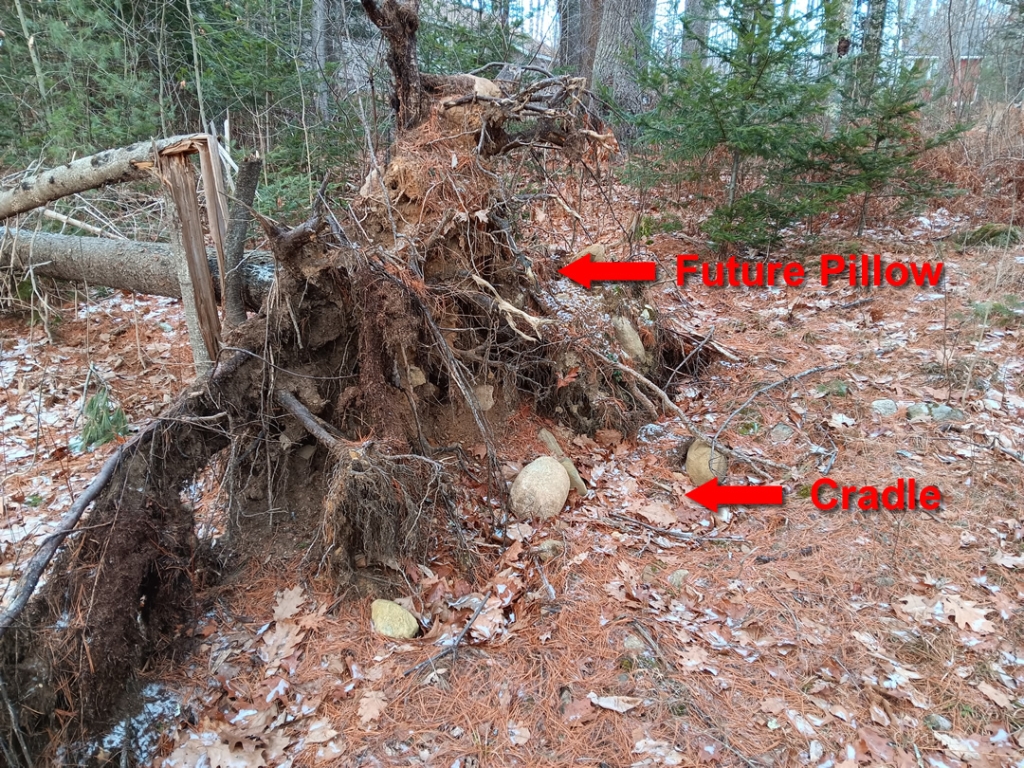
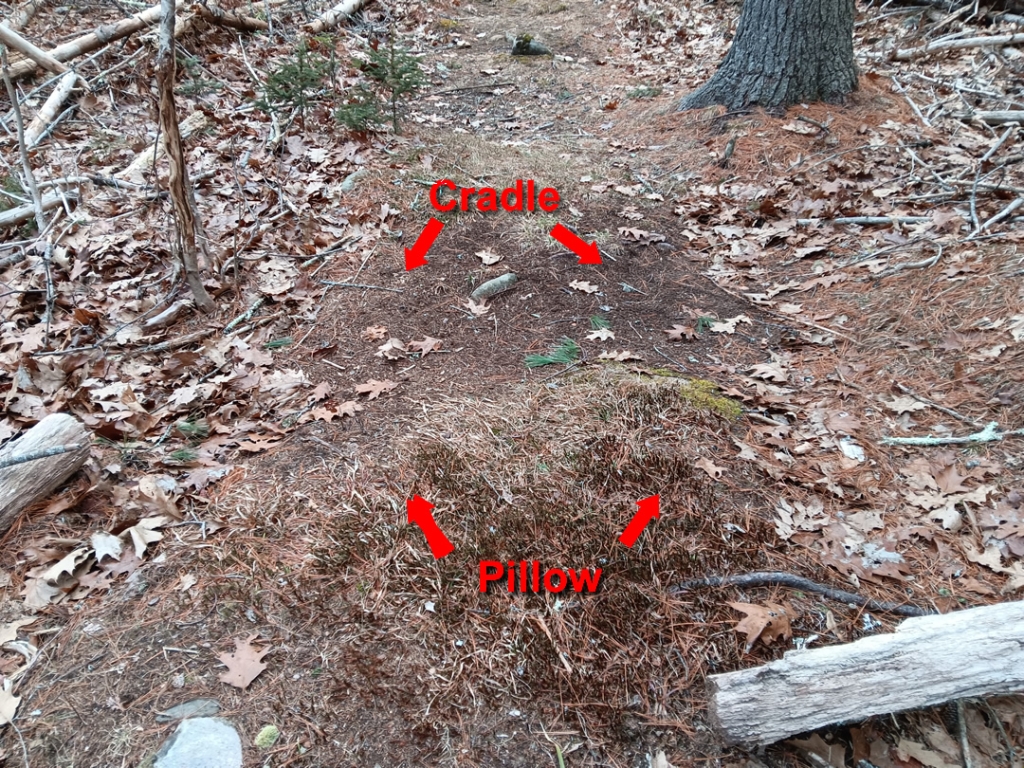
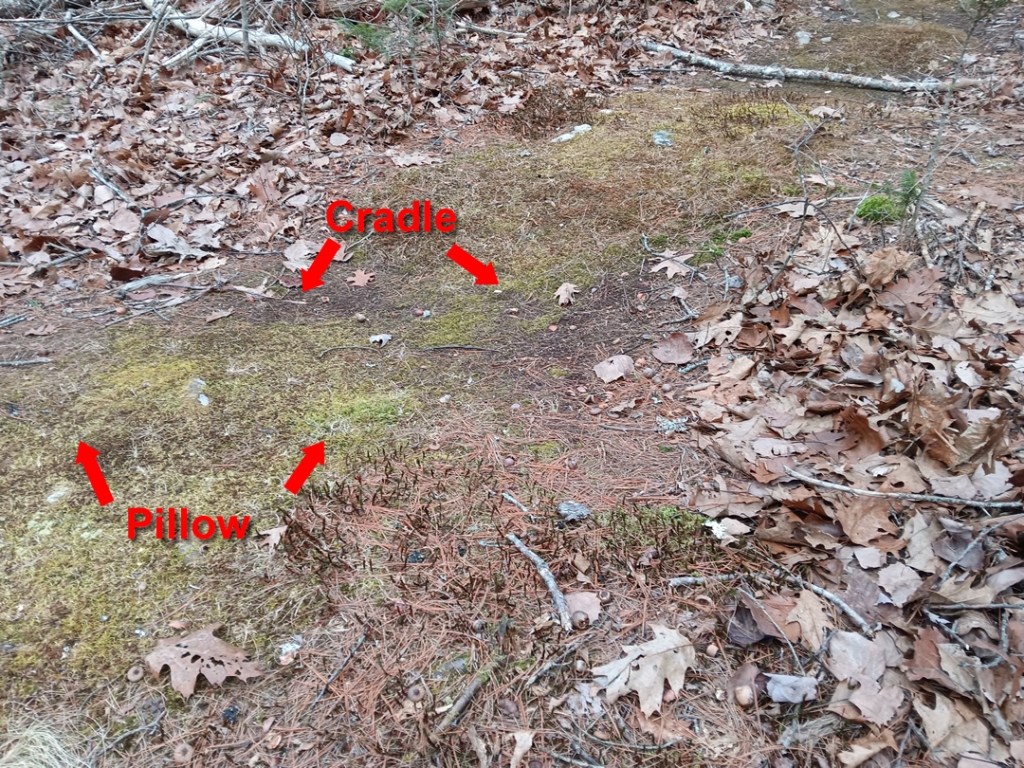
In this forest there are many examples of blowdowns in various stages of decomposition. Even very old pillow and cradles can be identified and attributed to specific storms, especially those toppled by hurricanes. The image above shows an example of a pillow and cradle apparently formed from a tree blowdown by a hurricane hundreds of years ago, before hurricane records were kept. The cradle is large, so this must have been a giant tree. Since the pillow is south-west of the cradle, the direction of the wind is the sign of a hurricane.
Pine Tree Dating and Mapping Project:
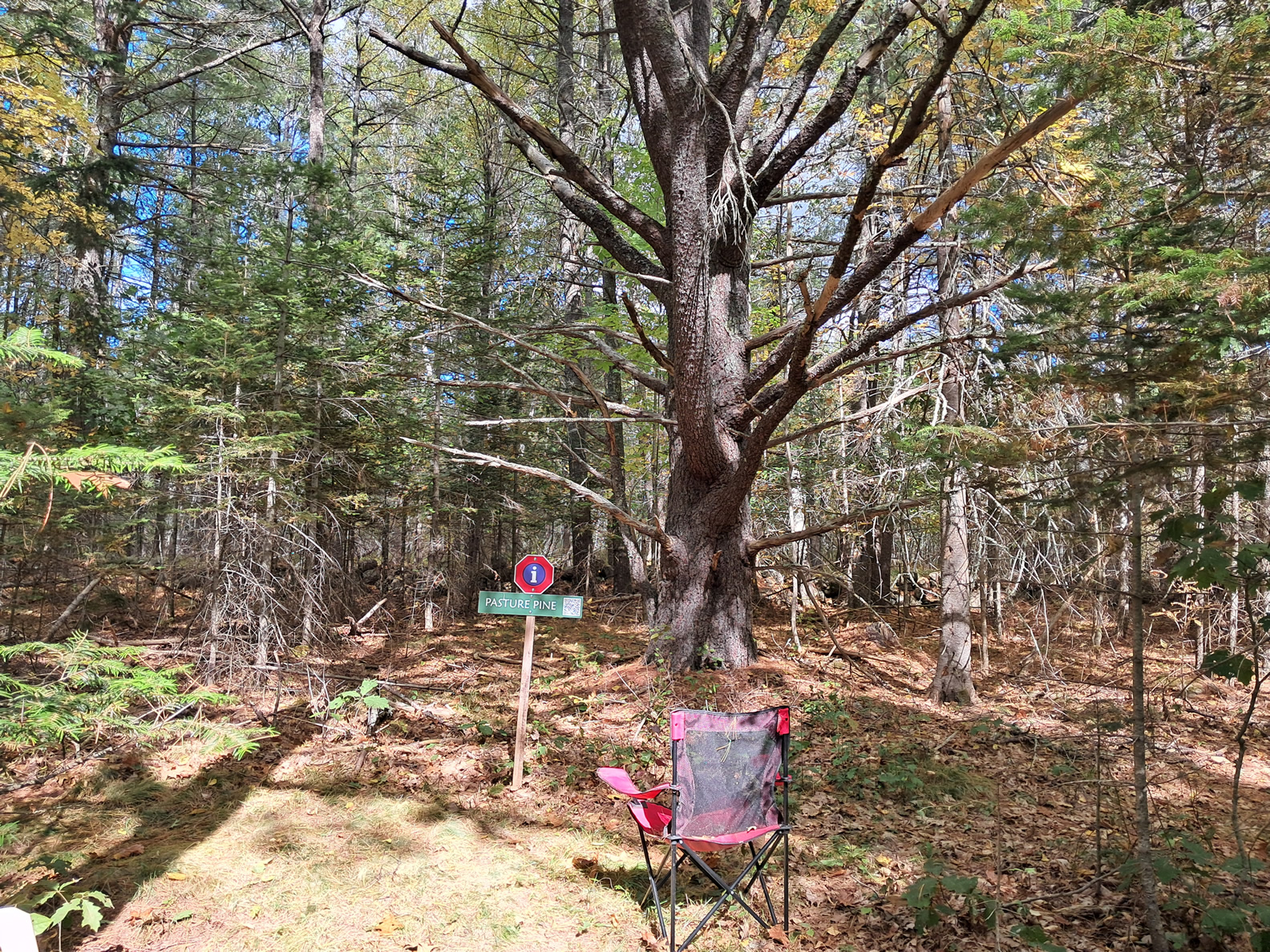
The purpose of this project is to determine the age and location of pine trees. In a forest like this one, which has been periodically disturbed by humans over the centuries, we can determine landscape changed by studying how pine trees have proliferated. Pine trees typically are among the first to colonize open spaces. Knowing when a pine tree sprouted helps reveal when a pasture of clear cut area was abandoned. With a detailed map we can visualize boundaries and timing of changes to the landscape.
Please support all our projects with a donation! All funds will be used to support volunteers and our educational mission.
For a limited time we can match your donation dollar for dollar!
We do not share your information with anyone!
Our Privacy Policy